
African cities for startups are no longer side notes in global tech conversations. They are now full-blown innovation hubs where ideas turn into real businesses, money moves fast, and founders are solving everyday problems at scale.
Africa is now a global hub for startups, with cities like Lagos, Nairobi, Cape Town, and Johannesburg leading the way. These cities attract entrepreneurs with strong ecosystems, skilled talent, and improving infrastructure. Each offers unique advantages.
While challenges like energy reliability and infrastructure persist, these cities provide opportunities for startups to grow and thrive. Choosing the right city depends on your goals, whether it’s scaling in Lagos, leveraging Nairobi’s tech scene, tapping Cape Town’s talent, or accessing Johannesburg’s corporate networks.
In the Global Startup Ecosystem Index, Africa is represented by 5 cities in the global top 150 and 16 cities in the global top 1,000. While Lagos, Cairo, and Nairobi remain the continent’s established anchors, several ecosystems, including Johannesburg, Casablanca, and Kampala, have posted some of the fastest growth rates worldwide. On average, African cities recorded a growth rate of 23.4%, with standout performers like Kampala and Johannesburg exceeding 40–50%.
This article breaks down the Top 10 African Cities for Startups in 2026, why founders are choosing them, and what makes each city special.
Table of contents
Top 10 African Cities for Startups in 2026
Here, let’s examine some of the African cities that are supposed to excel in 2026 and what each city presents to aspiring entrepreneurs.
1. Lagos, Nigeria
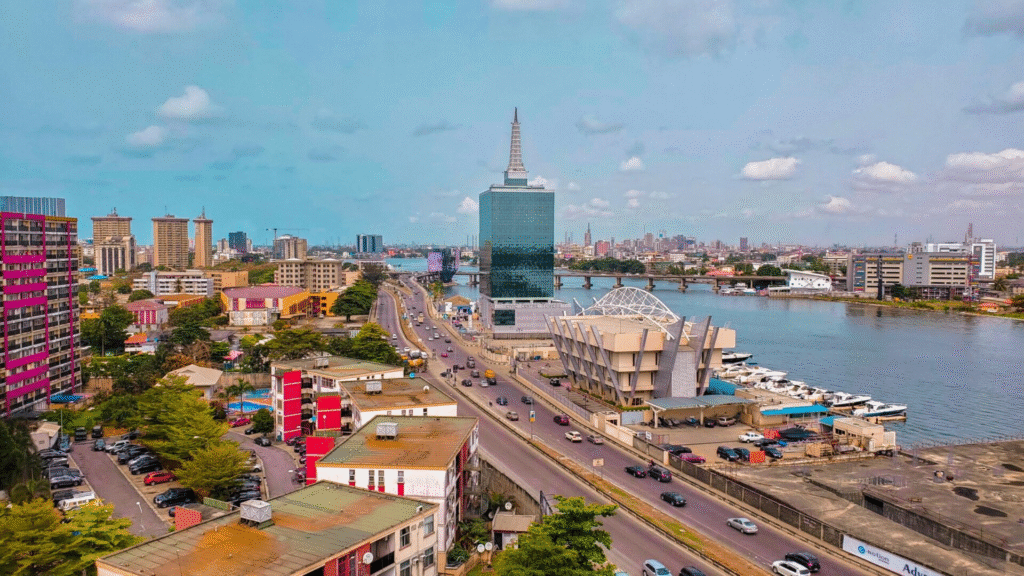
Traders, producers, and FMCG companies see less friction in imports and costs, and logistics companies/B2B have new corridors and clients. With regards to Lekki Port handling capacity and transshipment business, operations increased significantly in 2024/25, with aims to grow in West Africa via expansion.
Moreover, with Dangote refinery exports, Gasoline & middle distillate exports started in 2025 (including the first gasoline shipment to the US) despite evolving domestic sales regulatory environments. As a direct function of increased reliability, downstream pricing & supply challenges are alleviated for the Nigerian sector. Midstream & downstream sector solutions include logistics, marine operations, cold chain, industrials, packaging & plastics, and lubricants, working capital solutions for import substitutes.
Take out time to also read – Top 5 Influential African Business Leaders Shaping Africa’s Future
2. Abidjan, Côte d’Ivoire
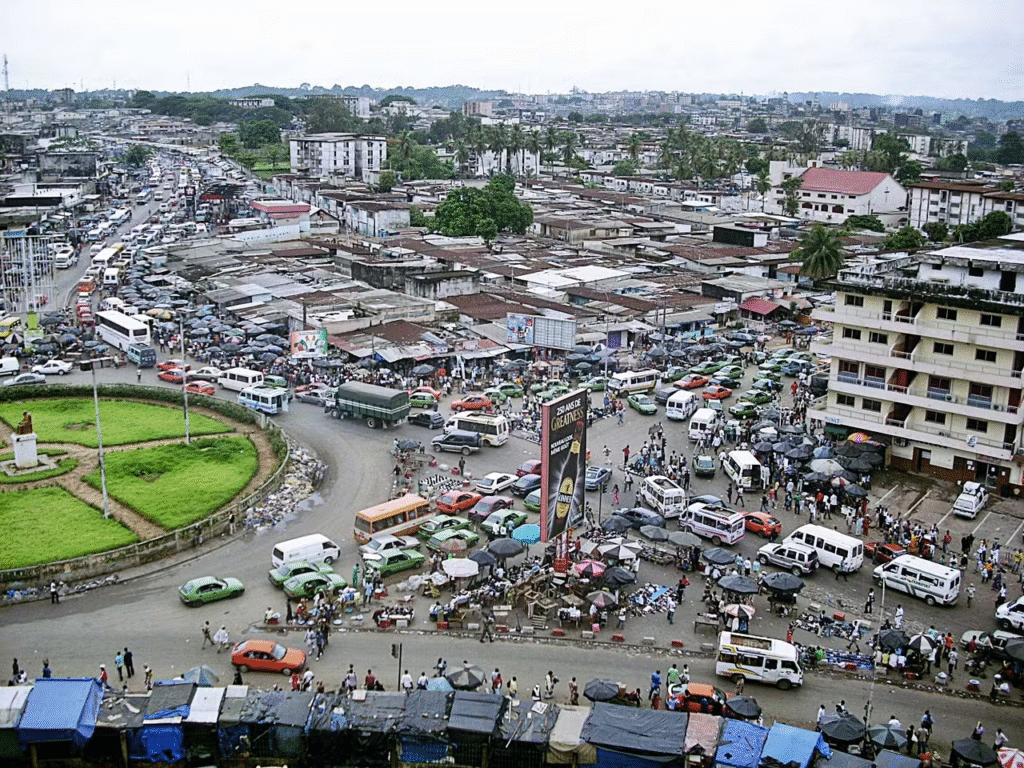
Abidjan offers a proven record of being one of the most reliable economies in Africa in terms of growth trajectory (between 6% and 6.5% until 2026) and transport projects. The location serves as a natural hub for expansion in the WAEMU region and a bridgehead to access the Sahel markets.
The capital metro project will have operations from 2025-26 and will transform transport, realty, and retail geography. Development opportunities for stations, last-mile logistics, consumer schemes in Francophone countries, agri-processing in cocoa derivative and cashew, industrial services, trade finance with a structured focus, and corporate headquarters will cater to the WAEMU region.
3. Nairobi, Kenya
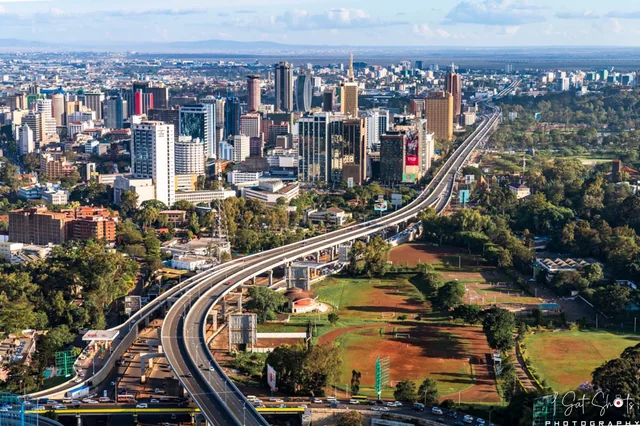
Nairobi’s technology sector is among the biggest on the Continent, with the government making efforts to stabilize macro-economic conditions in a challenging 2024/25. The World Bank believes a gradual rebound in growth is expected to reach ~5% in 2026/27, a positive factor in venture capital, payments, and private consumption in Kenya.
A loosening of monetary policies, a reduction in credit rates for SMEs, and the reopening of risk appetite in banks would boost capital expenditures and working capital investments in start-ups and mid-market companies.
The presence of good transport links to Mombasa and Uganda makes it an attractive fit for tech plus manufacturing hybrid models. Some of the competitive edges of Nairobi include payment technology, business SaaS solutions, logistics marketplaces, consumer credit, and light manufacturing.
4. Casablanca, Morocco
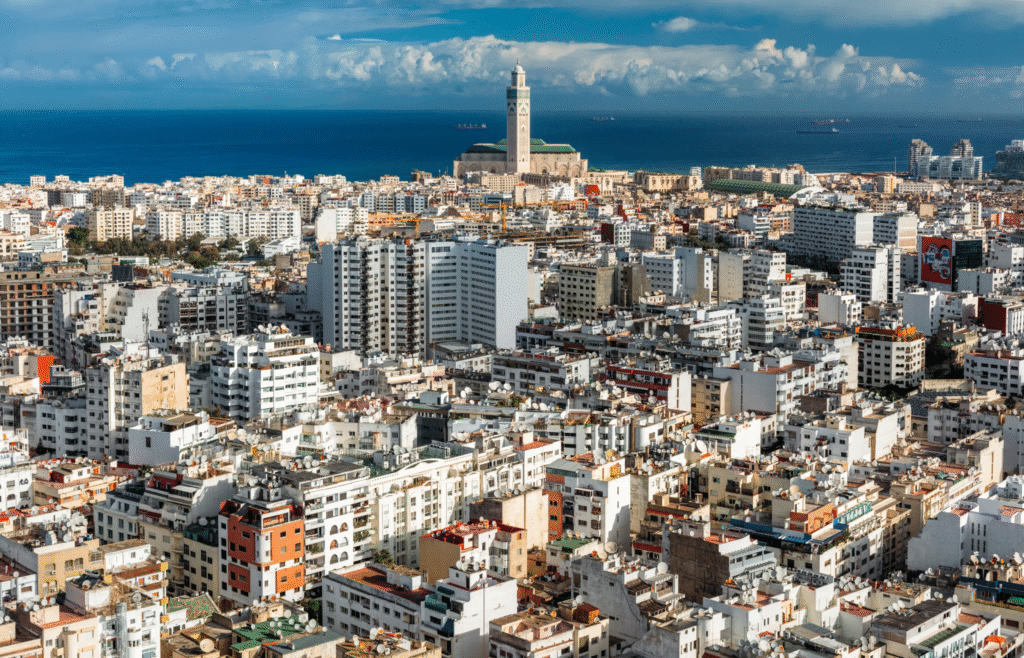
Casablanca Finance City (CFC) has grown into a stable financial hub in the continent and hosts over 200 international companies. Morocco’s expansion in other African countries, in addition to being geographically close to Europe, makes Casablanca a springboard for project finance, infrastructure, and treasury business. ‘
Sustainability investments will see increased action, especially in fintech and infrastructure, such as carbon markets and projects linked to Africa50. As Moroccan investments grow, investment in West Africa will keep work pipelines full in law, auditing, and advice.
Likely successful sectors include: regional HQ operations, investment fund management, corporate banking, green finance solutions, and international law advice.
5. Dakar, Senegal
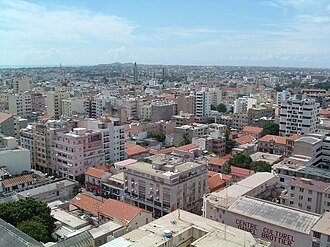
Dakar integrates logistics efficiency gains with TER trains for commuters/airport access to a macro production boost from “first oil” at the offshore Sangomar oil field, which began in 2024 and is accelerating in 2025. The oil revenue cash flow, plus fixed links with an international airport via rail transport, drive service, construction, and consumer sectors.
With Sangomar production entering ramp-up mode, the energy minister increased production forecasts for 2025; assumptions in 2026 budget settings will show how quickly expenditures are translated into investment in infrastructure & SMEs. TER Phase 2 to airport: Phase 2 will interconnect Blaise Diagne International Airport; monitor resolution of financial-dispute issues which may impact delivery & rolling stock.
Other opportunities exist in oilfield service operations, facility management, logistics/warehousing in the airport area, and consumer-facing businesses such as quick service restaurants and retail.
6. Kigali, Rwanda

Kigali is a small but goal-oriented economy. Although it grew by a near-double-digit rate in 2022-2024, prospects are encouraging in 2025-26 when it will benefit from a revival in tourist activities, construction projects, and an expansion in manufacturing industries.
As a Policy sandbox, Kigali is suitable for pilots requiring fast permitting, a conducive regulatory framework, and public-private partnerships. Kigali Innovation City & digital IDs with Enterprise tech, gov-tech, and health-tech thrive in Rwanda’s digital ecosystem.
MICE returns fuel demand for hospitality, catering, and event logistics. Business Opportunities that can succeed in this case include: B2G/B2B SaaS, med tech pilots, Professional Services, and Boutique manufacturing.
7. Dar es Salaam, Tanzania
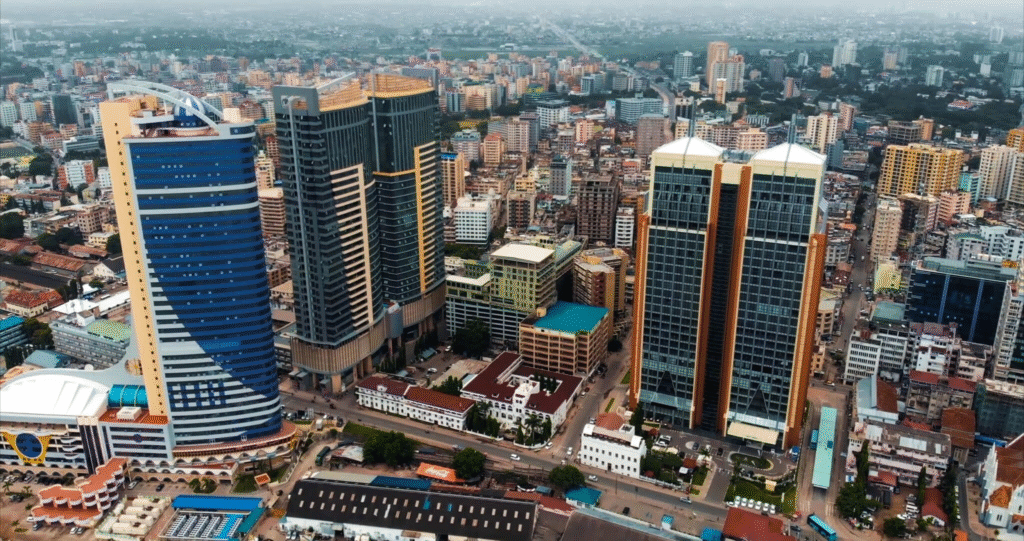
One country taking major strides in developing rail transport is Tanzania, and this is beginning to bear fruit. A transport network carrying freight on a new Standard Gauge Railway commenced operations in 2025, connecting the port city of Dar es Salaam with the capital city of Dodoma. With expansion into other regions, such as the north and west, transport of goods in these countries will be much cheaper than using roads.
Such a change from road to rail transport is very important to businesses. This will make it simple for companies in agriculture, industries, and mining to access local and global markets with their goods.
In the coming years, a network of trains will be developed in Tanzania and linked to a busy seaport in the major city of Dar es Salaam. Increased train operations and a better-connected seaport can initiate increased activity in inland logistics centers, storage warehouses, and cold storage warehouses.
By 2026, the largest opportunities in Dar es Salaam will probably include rail-linked warehouse storage, agricultural transport, and other service activities related to the rail transport system. As a result of this better transport network, sectors such as food processing, agriculture, and even mineral exports will have a chance to grow.
8. Addis Ababa
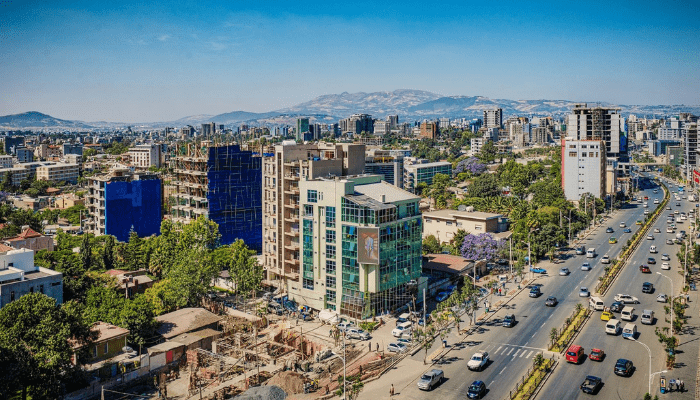
Addis Ababa is one of the busiest aviation hubs in Africa because of Ethiopian Airlines, which is now one of the largest and most successful carriers in the whole of Africa. The Addis Ababa Airport serves a connection from Africa to Europe, Asia, and the Middle East. Ethiopia will continue to improve Addis Ababa Airport and logistics operations to provide more opportunities for businesses to transport their goods in and out of Ethiopia by 2026.
The expansion would also facilitate air transport connections and make it easier for Ethiopia to transport flower exports, coffee, and other crops to the international market. Additionally, other industries such as textiles and manufacturing will have access to new markets. For global companies, Addis Ababa provides opportunities in the logistics, hotel, and service industries.
With the help of Ethiopia’s airline, which has linked Africa with Europe, Asia, and countries in the Middle East, Addis Ababa is among the most vibrant aviation hubs in Africa. Addis Ababa serves as an important hub for travel and transport, and thus a hub for trade. Come 2026, Ethiopia will have an even more expanded airport and logistics base.
Additionally, this expansion can be observed in other sectors. With better air transport connections, Ethiopia can now easily export coffee, flowers, and textiles. Opportunities in hotel and tourism operations have thus increased. Ethiopia can make Addis Ababa one of the major hubs in Africa if it persists in developing infrastructure and maintaining a stable political setup.
9. Accra, Ghana
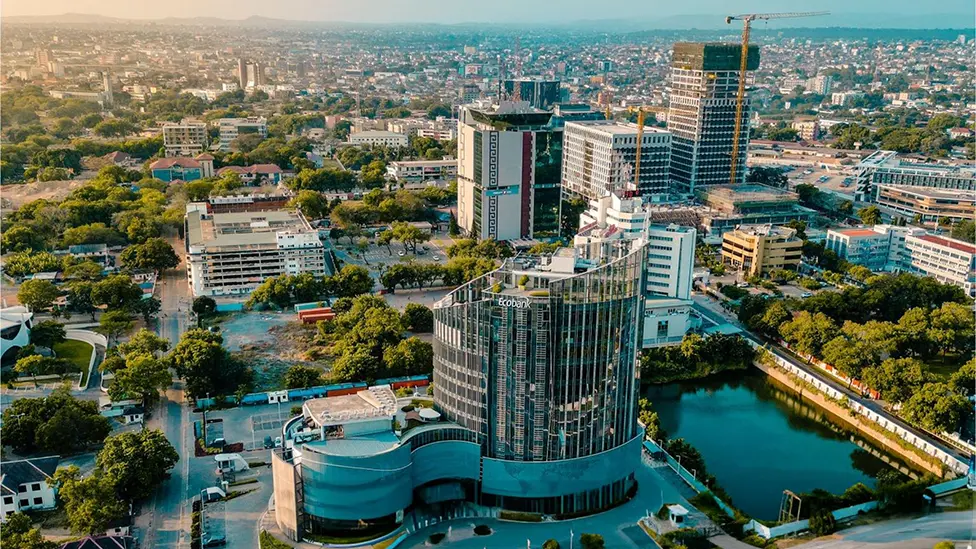
Accra is fast becoming among the most promising environments for doing business in West Africa. With a stable democracy in Ghana and a welcoming investment environment, entrepreneurs feel safe and drawn to this investment haven. Come 2026, Accra will shine brighter as a hub for start-ups.
However, mining is still an important sector in the economy of Ghana. Ghana is among the leading gold-producing countries globally. Other exports from the mining sector include bauxite and manganese. Therefore, jobs can be obtained in mining or other related sectors, which include transport and refining industries and companies dealing with mining equipment.
What is interesting in these cities is that each one in Africa does not have a recipe for expansion. While some cities in other parts of the world may have a recipe for expansion because they are all doing the same thing in terms of being hubs, in this case, each city in Africa is really taking a different path.
For entrepreneurs, this means opportunities exist in pairing a given idea with an appropriately conducive environment.
A fintech application can thrive in Accra but not in Addis Ababa, but this is evident: each country is playing a different role in the African economy.
10. Johannesburg, South Africa

Johannesburg jumps 17 positions to 122 in the ranking, with the highest growth rate in South Africa of over 42%. Much of this can be attributed to increased adoption in the enterprise space, fintech activity, and a good level of interaction with large enterprises.
As a consequence, it now takes over the top spot in the country in terms of ranking among startup cities from Cape Town. On a national level, Johannesburg shines in a decentralized startup ecosystem, with a score just 1.1 times larger than Cape Town’s.
The two cities both belong to the top 50 global players in this industry. However, Johannesburg’s swifter pace, geographical convenience to major financial institutions, and increasing investor confidence have given it a lead.
The city is becoming increasingly recognized as where scale-ups grow faster through collaborations, as Johannesburg is placed as the leading startup ecosystem in South Africa in 2025.
Don’t miss out on reading – Top 5 African Social Entrepreneurs Creating Sustainable Change in 2026
What Makes these Cities Tick for Startups
- Each of these cities has a different energy. Lagos operates at a fast and hard pace. Nairobi operates in an organized and focused manner. Cape Town operates with a polished and international approach. Cairo operates with a strong and aggressive strategy.
- Talent is the leading factor. Such cities attract bright and talented youth who want to create real-world things. One can easily find people such as developers, designers, marketers, and product managers. They are more readily available than before. They are either self-educated, very flexible, and have experience working with less.
- The interest of investors grows with time. Capital is not coming from abroad alone. Local angels and
- The role of VC firms is now more important. They understand the market, the users, and the big picture. Capital is competitive, but good founders have more choices available to them than before.
- Digital infrastructure has gotten to a stage where it is workable. Smartphones are common. The internet continues to improve. Mobile money and online payments make it easy for new companies targeting consumers to operate. Even when they go offline, the founders of such companies work around them.
- Problem-solving is deeply ingrained. “African startups are solving pain points,” says ISHQ founder Eugenia Kuyda. “Payments, logistics, healthcare, education, access. When a product is good, people will quickly adopt it because they need it.”
- Founders have preferences in terms of cities they want to operate from. Market size, access to capital, lifestyle, regulations, and plans influence such selections. No city will fit all preferences. A fintech company can work in a city like Lagos, while another is based on SaaS in Cape Town.
African cities for startups are not trying to be in the spotlight anymore. They have got their own tempo and rhythm in place.
Why 2026 Is a Big Year for African Startups
The momentum is building, and 2026 is right in the middle of it.
- More capital is being injected, and smarter people are investing. Capital is being driven towards a sustainable model and not just a hyped-up model. Local investors are playing a major role in contributing to a strong ecosystem.
- Governments are taking notice. Policies to support startups, digital regulation, and innovation support are slowly being developed. Some governments have come to realize that startups are not disruptions but engines of growth.
- Talent is younger and more connected. Entrepreneurs are building with global ambitions from day one. The remote work culture enables teams to reach across cities and countries without a lag.
- Founders in diaspora are returning to their countries with experience and capital. Global companies are setting up offices in Africa, developing local talent which later leads to a start-up.
- African startup ecosystems in 2026 appear more evolved, more deliberate. Systems are more discernible. Communities are better developed. Progress appears systematic, not random.
African cities for startups are no longer in the future. They are in the present, and it will only speed up.
Conclusion
African cities for startups are no longer trying to prove their potential. They are delivering results. Johannesburg’s rapid rise highlights how momentum, enterprise access, and investor confidence can reshape an ecosystem in a short time.
Across the continent, African cities for startups are maturing fast. Talent is stronger. Capital is smarter. Markets are more connected. By 2026, the conversation is shifting from “can startups succeed here?” to “which city gives founders the best advantage?”
The pace is set, and African cities for startups are firmly leading their own growth story.
Frequently Asked Questions
African cities for startups are gaining attention because they are solving real problems at scale. Stronger talent pools, better digital infrastructure, and increasing investor confidence have turned these cities into serious innovation hubs rather than emerging experiments.
No. While fintech is strong, African cities for startups also support healthtech, edtech, logistics, climate tech, SaaS, and e-commerce. The common factor is solving everyday challenges with technology.
Cities like Lagos, Johannesburg, Nairobi, and Cairo offer large markets and strong investor activity, making them ideal for startups ready to scale beyond early traction.
Funding is competitive, but access has improved. More local investors and regional funds now understand African markets better, making it easier for solid startups to raise capital than in previous years.