
African banks are the fastest-growing, with huge assets that determine the fate of the continent’s economy. People use them to save, invest, and handle money safely.
These are not just figures on a balance sheet; these are banks that play a significant role in daily life, be it through providing loans to small-scale industries or helping families plan for the future.
Understanding which banks hold the biggest assets shows a clear picture of where financial power and stability lie in Africa today.
The world of banking can be convoluted, but at the core, it is about trust and access. For anyone looking to grow their money or just wanting to understand how the financial landscape of the continent works, knowing the top players is key.
This guide takes you through the largest African banks by assets in 2026, showing ways in which they influence business, trade, and everyday life across the continent.
Table of contents
What Does “Largest by Assets” Really Mean?
First off, let’s clear the air: When banks are ranked by assets, it is not about who has the most branches or runs the loudest adverts.
Assets include cash, loans given out, investments, government securities, and other financial holdings.
The bigger the assets, the stronger the bank’s financial muscle.
Think of it this way: a bank that has huge assets can also survive during economic downturns and lend more money out, investing in technology.
It can expand into new countries without panicking. That’s why asset size is one of the most trusted ways to measure banking strength.
Take out time to read – Top 5 African Startups Disrupting the Tech Industry in 2026
The Top 5 Largest African Banks by Assets
This list is dominated by banks from South Africa, Egypt, and Morocco, such as Absa, Banque Misr, and Attijariwafa. These major African financial institutions have always kept pace with banking on the continent, almost rivaling others from the rest of the world.
See below for the full list of the five largest African banks by assets.
1. ABSA Group (South Africa)
ABSA initially emerged from a 1991 merger between several building societies that later formed, in 1998, the Amalgamated Banks of South Africa, popularly known as ABSA.
Its international profile was crafted by Barclays PLC’s majority 2005 acquisition, a relationship that was fully unwound by 2021. Free of its UK parent, ABSA has pushed its “Africanacity” strategy harder than ever.
According to its integrated report for 2024, the group’s assets are at US$95 billion, underpinned by a diversified home-market portfolio and a focused presence in 12 other African countries.
Its operations are structured across:
- Retail and Business Banking include
- Corporate and Investment Banking (CIB)
- Wealth and Investment Management
RBB in South Africa remains the largest contributor to profit, but regional African operations are the fastest growing.
Technology and market depth drive ABSA’s impact among African banks. Its presence in South Africa features an award-winning digital banking app and ecosystem, featuring Apple Pay integration, that has set industry benchmarks while increasing financial inclusion and reducing servicing costs.
The bank has moved beyond corporate banking to build a strong retail and SME franchise in Kenya and Ghana, with products relevant to local markets.
But it is this twin focus-innovating at home, and cautious expansion across the continent-that has helped ABSA shake off its old subsidiary image to emerge confident as a pan-African competitor whose asset growth is tied to consumer and business activity.
2. Qatar National Bank (Egypt)
QNB’s rise in this ranking is based on one of the most significant cross-border acquisitions in African banking history.
In 2012-13, it fully acquired Egypt’s NSGB, or National Société Générale Bank, for a reported $2.5 billion and absorbed it into the fold of the group.
While the Doha-based QNB Group holds global assets of more than US$ 300 billion, the latter’s Egyptian subsidiary remains, under its current branding of QNB ALAHLI, the single largest asset pool on the continent.
Status as of 2024:
- QNB ALAHLI’s assets exceed US$60 billion.
- Full-service universal bank operation.
- It benefits from QNB Group’s AA-rated balance sheet and deep liquidity.
QNB’s presence in Africa, via Egypt, has been transformational. It injected capital strength and stability into the banking system during the turbulence that followed the 2011 revolution.
By virtue of access to low-cost funding, the bank can offer competitive lending rates and finance large infrastructure and energy projects requiring long-term capital.
It is also QNB’s regional hub for North and East Africa, through which trade and investment are routed from the Gulf to the continent. Its position reflects a larger shift in African banks where Gulf capital now plays an expanding role in commanding the continent’s biggest financial pools.
Don’t miss out on reading – Top 5 African Tech Hubs Reshaping Africa’s Economic Future
3. FirstRand Bank (South Africa)
FirstRand was born in 1998 through a unique unbundling of this corporation, which created a holding company for several powerful financial brands.
These include First National Bank-FNB, Rand Merchant Bank-RMB, WesBank, and Ashburton Investments. It operates under a highly decentralized structure, where each of these businesses enjoys substantial autonomy.
The group had, as at the close of FY 2024, recorded an asset base of US$110 billion.
The portfolio is carefully weighted:
- FNB anchors retail and commercial banking with an enormous deposit base.
- RMB will drive investment banking, structured finance, and cross-border deals.
- WesBank leads in vehicle and asset finance.
This allows capital and client opportunities to move smoothly across the group.
FirstRand derives its strength among African lenders from innovation and disciplined deployment of capital. FNB is one of the most digitally advanced banks on the continent, earning revenue from a platform offering banking, insurance, telecoms, and stock trading.
The RMB has shaped major corporate transactions and financed complex infrastructure projects across Africa, often in conjunction with other global investors.
The consistently high return on equity of the group illustrates how well its federated model has worked. FirstRand operates less as a single bank and more as a financial ecosystem built to find and scale growth early.
4. Banque Misr (Egypt)
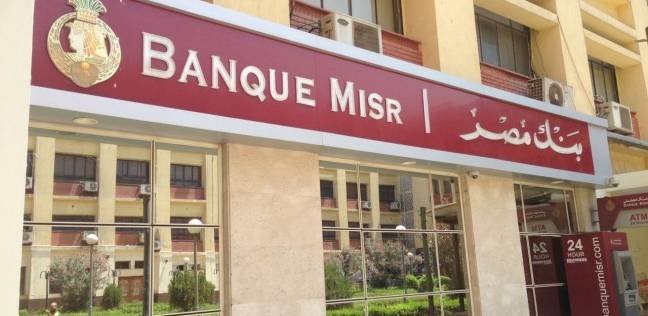
Banque Misr was established in 1920 by economist Talaat Harb Pasha, who wanted the first fully indigenous bank in Egypt to help develop economic independence.
Today, along with the National Bank of Egypt, it is one of two state-owned pillars of the country’s financial system. For FY 2024, it reported assets of $75 billion.
The structure of its assets reflects its role in public policy:
- Heavy allocation to treasury bonds
- Subsidized lending for agriculture and manufacturing
- Financing of mega state-led infrastructure projects, such as the new administrative capital.
It already operates the largest network in Egypt, with over 830 branches, and holds a significant share of public-sector payroll accounts and retail deposits.
The bank has a deep impact on the economy. It acts as a conduit for government policy and, while doling out credit to priority sectors, provides essential services to millions of customers.
This close integration links its performance to the state’s fiscal health and makes asset quality vulnerable to sovereign risk.
During currency flotation and other economic reforms, it acts as a stabilizer but has to manage the volatility in foreign currency exposure. To the observers, it is a direct reflection of the economy’s direction in Egypt.
Make out time to read – Top 5 African Billionaires Driving Africa’s Economic Development
5. Attijariwafa Bank (Morocco)
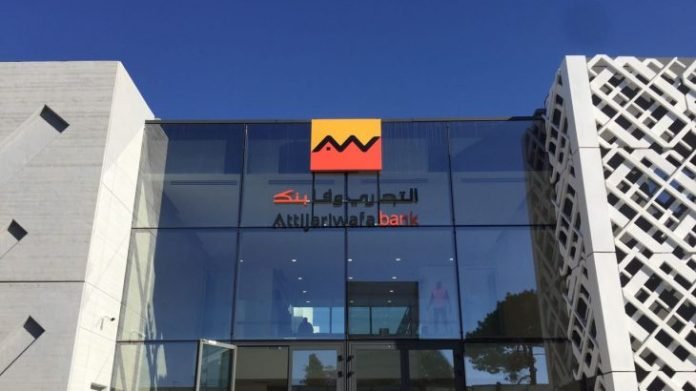
Attijariwafa Bank has its roots in 1904, when it was founded as Banque Commerciale du Maroc.
In its modern form, it emerged from a 2003 merger with Wafabank, to which was added the absorption of Crédit du Maroc. This consolidation gave birth to a national champion that then went on to expand aggressively across the continent.
According to its report from 2024:
- The total assets are at about $70 billion.
- International operations contributed close to 25% of net banking income.
- It serves more than 8 million retail customers in Morocco.
It is strong because it combines a dominant retail presence at home with that of leading corporate and commercial in Francophone Africa, including Tunisia, Senegal, and Côte d’Ivoire.
It plays a connecting role in the African region.
Its standardized but locally adapted model has improved financial inclusion and intra-African trade, notably for Moroccan and European firms entering West Africa. The WafaCash platform plays a key role in international money transfers for the Moroccan diaspora.
While its exposure to specific markets brings political and currency risk, the bank’s growth also shows how a domestic institution can become an anchor for regional growth and financial stability.
Why These African Banks Matter to Everyday People
It’s a lot easier to think that big banks only matter to politicians and billionaires. That’s not true.
When a bank is strong:
- Your savings are safer
- Loans are easily provided.
- Digital services improve
- Businesses grow, expanding their workforce.
These banks also finance roads, power plants, schools, startups, and homes. They quietly shape daily life.
To someone trying to grow a small business, a strong bank means access to credit. To a salary earner, it means regular and timely payments. Also to the economy of the country, it means stability.
Read more – Top 10 African Cities for Startups in 2026: Innovation Hubs to Watch
The Bigger Picture for African Banking in 2026
African Banks are a far cry from what they were ten years ago. In 2026, digital banking is not an option; cross-border payments have gotten faster, while risk management has gotten smarter. Customers want more, and banks are yielding.
These are not lucky banks that found their way onto this list. They grew their assets by engendering trust, scaling up through smart decisions, and adapting to different external economic conditions that elevate their profile as a performer.
They know how to survive currency swings, inflation, political changes, and global shocks.
That’s why they are still standing tall.
Conclusion
The largest African banks listed in this article show how strong governance, innovation, and regional reach shape Africa’s financial landscape.
They affect daily banking, business development, and international trade; the proof that banking power is what attracts real economic difference.
Frequently Asked Questions
They expand through retail deposits, corporate lending, investment banking, digital innovation, and regional operations.
The reason being they are highly regulated, their portfolios are very diversified, and their capital reserves are huge.
They offer safer savings, easier access to loans, digitized payments, and financial products that help individuals and small businesses better manage their money.