
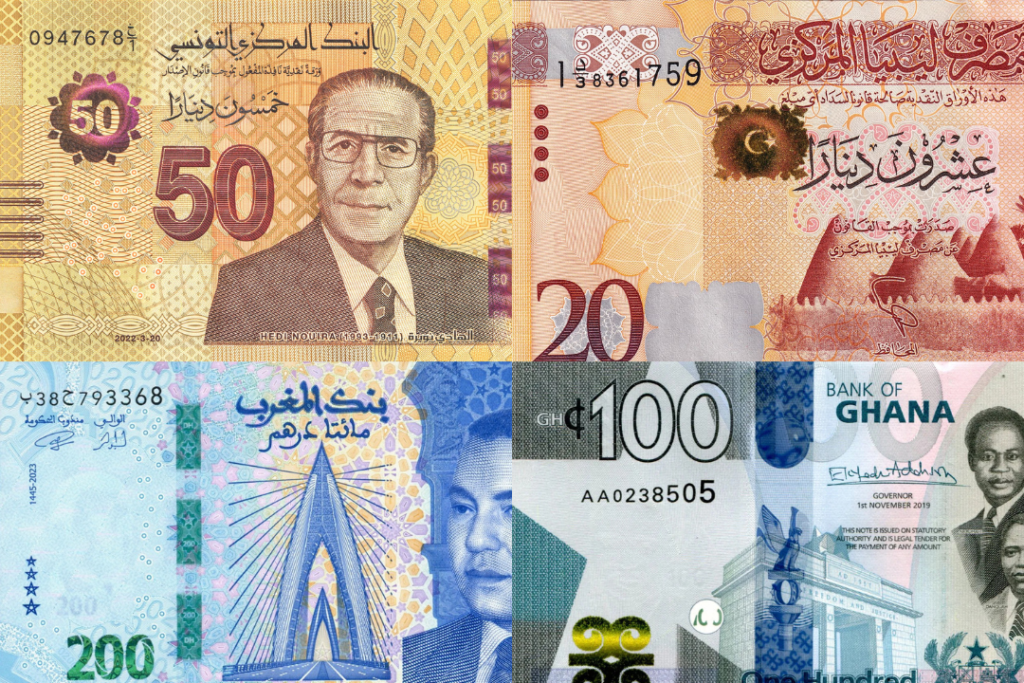
When you think about money in Africa, the most valuable African currencies often surprise people because they hold strong against the mighty US dollar, even as global economies shift. These top currencies, like the Tunisian Dinar, Libyan Dinar, Moroccan Dirham, Ghanaian Cedi, and Botswana Pula, stand out as the most valuable African currencies due to smart economic policies, rich natural resources, and steady growth plans heading into 2026. In a continent full of ups and downs, these five bucks show real strength, making travel, trade, and investments easier for folks dealing across borders. Let’s dive into why they top the list and what makes them tick in simple terms.
Imagine you’re planning a trip across Africa or eyeing some business deals, and suddenly you realize not all money is equal here. The most valuable African currencies aren’t just paper or coins, they’re tickets to stability in a wild economic world. As we roll into 2026, these currencies shine brighter than ever, backed by oil riches, tourism booms, mining hauls, and governments that know how to keep inflation in check.
Why do they matter? Well, a strong currency means your money buys more abroad, attracts investors, and keeps prices steady at home. Take the Libyan Dinar, it’s like the heavyweight champ because Libya pumps out oil like nobody’s business. Or the Tunisian Dinar, which stays tough thanks to rules that keep it from leaking out too fast. Morocco’s Dirham? It’s almost like Europe’s money, thanks to close ties and free convertibility. Ghana’s Cedi has bounced back with gold and new reforms, while Botswana’s Pula rides high on diamonds and smart saving.
Experts predict these most valuable African currencies will hold or even climb, thanks to global demand for Africa’s resources and better trade deals. But it’s not all smooth, wars, droughts, and world events test them. Still, their stories are captivating: from ancient trade routes boosting Morocco to diamond fields sparkling in Botswana. This isn’t just numbers; it’s about real lives, markets buzzing in Tunis souks, Libyan oil rigs humming, Ghanaian cocoa farms thriving, and Botswanan safaris drawing dollars. Over the next sections, we’ll break down each one, history, value today, 2026 outlook, and tips for using them. By the end, you’ll see why these five rule the roost among most valuable African currencies, and how they shape Africa’s future.
1. Tunisian Dinar (TND)
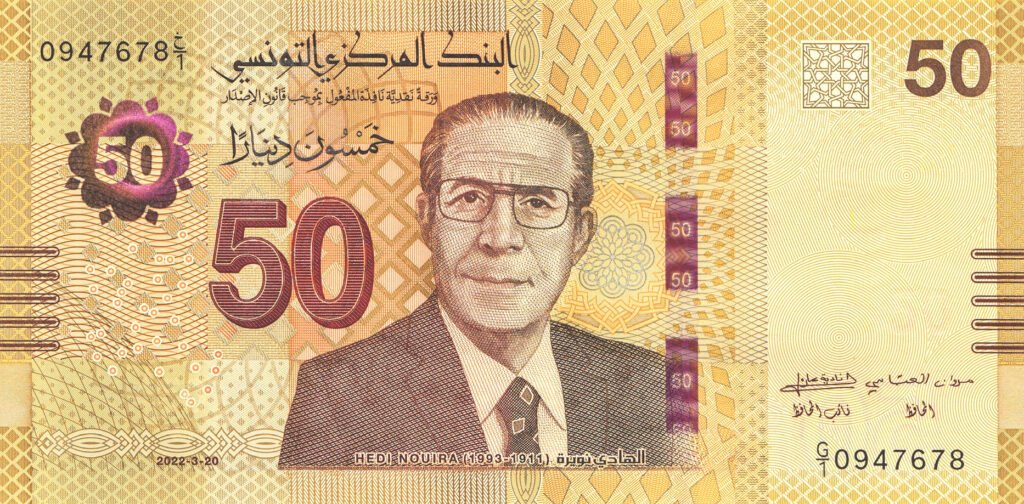
The Tunisian Dinar tops the charts as the king of most valuable African currencies in 2026, worth about 1 USD = 3.10 TND right now, and forecasts say it’ll stay rock-solid or nudge higher. Introduced in 1958 after Tunisia broke free from France, the TND gets its muscle from a mix of tourism, olives, phosphates, and tight controls by the Central Bank of Tunisia. You can’t easily take Dinars out of the country, that rule keeps it scarce and strong, like locking treasure in a vault.
What makes it captivating? Tunisia’s economy chugs along at 3-4% growth yearly, fueled by Europe next door sending tourists and investors. In 2026, with EU trade pacts deepening and green energy projects blooming (think solar farms), the Dinar could hit 1 USD = 3.05 TND, per early forecasts. But challenges loom: political wobbles post-Arab Spring and water shortages test it. Still, everyday folks love it, buy a coffee in Tunis for 2 TND (under a buck), or a meal for 15 TND. For travelers, exchange at banks only, and use cards where possible to dodge black market traps.
Historically, the TND has beaten inflation better than neighbors, hovering stable since 2010. Businesses eyeing North Africa swear by it for low-risk deals. Fun fact: “Dinar” echoes ancient Roman coins, tying Tunisia’s money to 2,000 years of trade glory. In 2026, watch for digital TND upgrades to fight fakes and speed payments. If you’re investing, TND bonds yield nicely with low risk. Bottom line: This currency’s reliability makes it the go-to for anyone serious about African finance.
Read More: Top 5 Largest African Banks by Assets in 2026
2. Libyan Dinar (LYD)
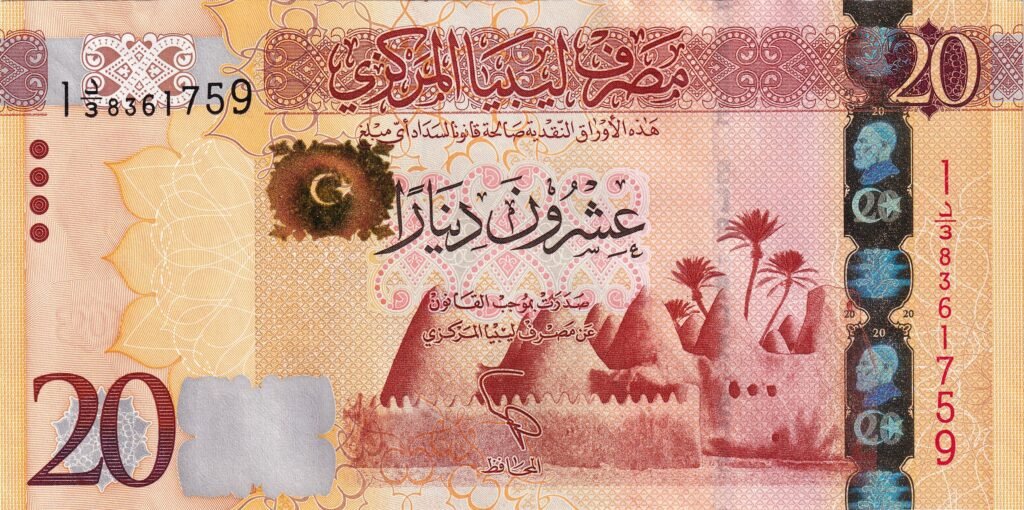
Sliding into second, the Libyan Dinar reigns as one of the most valuable African currencies, with 1 USD ≈ 4.80 LYD, powered purely by the black gold under Libya’s sands. Born in 1951 under King Idris, the LYD (split into 1,000 dirhams) soared when oil discovery in the 1960s turned desert into dollars. Even amid civil wars since 2011, oil exports, over 1 million barrels daily, keep it afloat, with the Central Bank of Libya splitting revenues fairly.
Heading to 2026, stability talks and UN-backed unity could push it to 1 USD = 4.70 LYD if production hits 1.5 million barrels. But risks are real: militias, sanctions, and OPEC cuts shake it. Yet, its strength captivates, Libyans buy imports cheap, from cars to gadgets. Exchange in Tripoli banks or ATMs, but carry cash due to spotty services. Tourism’s reviving too; imagine a Mediterranean beach vacation where your Dinar stretches far.
The LYD’s story is a thriller: From Gaddafi’s oil nationalization to today’s fragile peace, it endures. Subdivided into qirsh and millimes, it’s practical for markets. In 2026, digital wallets and anti-corruption drives aim to modernize it. Investors love LYD for oil futures bets. Compared to weaker neighbors, it’s a beacon, proving resources trump chaos sometimes. For users, avoid street changers; stick to official spots for safety.
3. Moroccan Dirham (MAD)
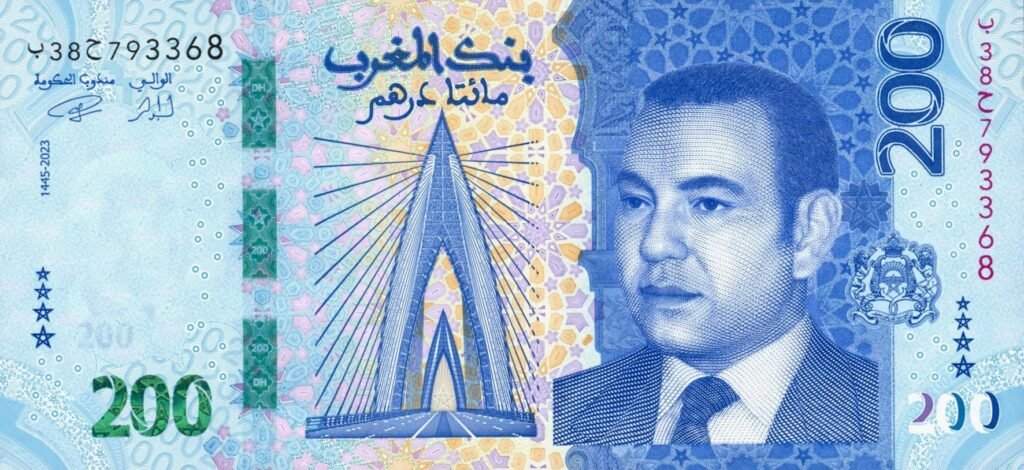
Morocco’s Dirham claims third spot among most valuable African currencies, trading at 1 USD ≈ 10.00 MAD, one of just two freely convertible in Africa alongside the South African Rand. Named after “dirham” from Arabic silver coins, it dates to 1882 but stabilized post-1956 independence. Backed by tourism (14 million visitors yearly), phosphates (world’s top exporter), cars, and EU ties, the MAD thrives.
2026 forecasts slight gains to 1 USD = 9.90-10.20 MAD, with floating rate plans adding flexibility amid US dollar strength. Marrakech souks buzz with it, tagine for 50 MAD, riad stay for 800. But earthquakes and droughts pinch; still, 4% GDP growth and green hydrogen bets excite. Travelers: Exchange at airports or use cards; it’s accepted in West Sahara too.
Captivating perks? Morocco’s king-led stability and World Cup 2030 prep boost it. Central bank interventions keep volatility low (under 1%). Businesses flock for convertibility, no export bans like Tunisia. Fun twist: 10 MAD coins feature Atlas Mountains. In 2026, expect e-Dirham pilots. It’s investor candy, stable, trade-friendly, and future-proof.
Read Next: 5 African Countries with the Fastest-Growing Economies in 2026
4. Ghanaian Cedi (GHS)
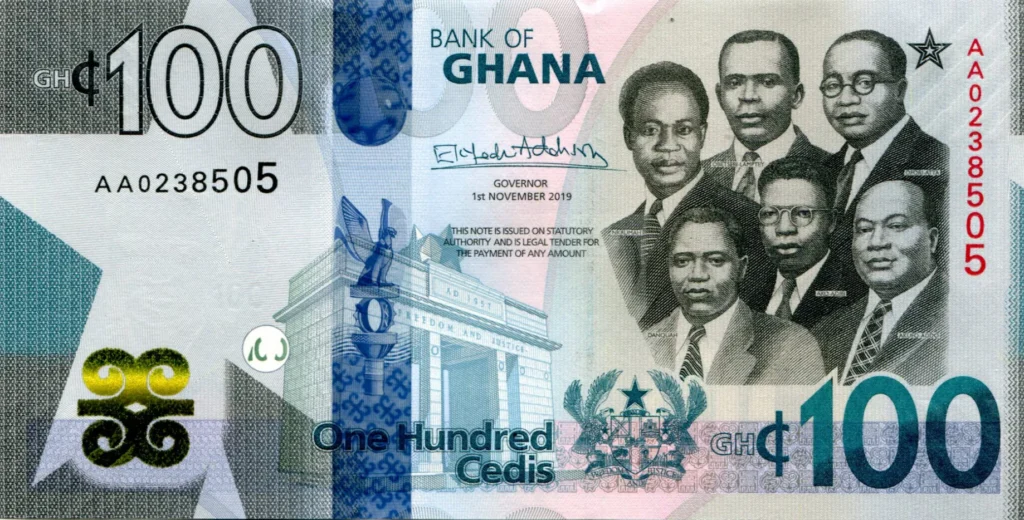
The Ghanaian Cedi bursts into fourth, one of the most valuable African currencies at 1 USD ≈ 12.50 GHS, a comeback kid after 2022 crashes. Relaunched in 2007 (1 new Cedi = 10,000 old), “Cedi” means cowrie shells, ancient trade cash. Gold, cocoa (world’s second producer), oil, and bauxite fuel it, with 2026 IMF deals and gold-backed reserves eyeing 1 USD = 12.00 GHS.
Why attention-drawing? Ghana’s digital finance boom, mobile money kings like MTN, stabilizes it. Markets in Accra hum: fufu for 20 GHS, trotro ride 5 GHS. Challenges? Debt restructures and elections, but 5% growth projected. Swap at forex bureaus; cards work in cities.
From Kwame Nkrumah’s vision to today’s “Gold Coast” revival, the Cedi’s resilience. Subunits pesewas make change easy. 2026 highlights: Gold coin program to hoard reserves. It’s trade-friendly for West Africa, drawing startups. Vibrant, accessible, perfect for entrepreneurs.
5. Botswana Pula (BWP)
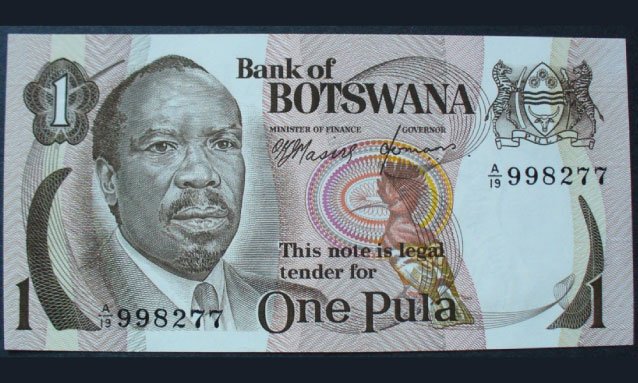
Rounding out the top five most valuable African currencies, Botswana’s Pula shines at 1 USD ≈ 13.60 BWP, diamond-driven diamond. “Pula” means rain or blessings in Setswana, launched 1976 post-independence, it’s Africa’s longest stable democracy’s pride. Debswana (De Beers + gov) mines 25% of world gems, plus beef and tourism.
2026 outlook: Steady at 13.50 BWP per USD with diversification into tech and solar. Gaborone deals: goat stew 40 BWP, safari 2,000. Low corruption (top in Africa) and 4% growth lock it in. Exchange banks; eco-tourism dollars help.
Gripping tale: From poor herders to upper-middle income via wise savings (Pula Fund: $5B+). Subunits fit daily use. 2026: Citizen Economic Empowerment for jobs. Investor haven, transparent, green-focused. Pula’s not just money; it’s Botswana’s blessed future.
Read Also: Top 5 Must-Visit African Tourist Destinations in 2026
Conclusion
These top 5 most valuable African currencies, TND, LYD, MAD, GHS, BWP, prove Africa’s economic muscle in 2026, blending resources, policies, and grit. They promise stability amid global storms, boosting trade and dreams. Watch them; they’re Africa’s financial stars.
Frequently Asked Questions
1. Which is the strongest African currency in 2026?
The Tunisian Dinar (TND), at ~3.10 per USD, leads due to strict controls and a steady economy.
2. Can I use these currencies abroad?
MAD is freely convertible; others limited, exchange via banks to avoid issues.
3. What affects their value?
Resources like oil/diamonds, policies, global prices, and stability.
4. Will they strengthen more in 2026?
Likely yes for most, with growth and reforms, but politics could sway.